Declined Service Follow-Up for Auto Repair Shops
Last updated: March 2026
Overview
Every day, roughly one in three recommended services gets declined at the service counter. Your technician spots worn brake pads during a DVI, your service advisor presents the estimate, and the customer says "not today." That declined RO line item represents real revenue—$200 to $600 per service—walking out the door. Without systematic follow-up, most of that work never comes back to your shop.
The problem isn't customer intent. Most customers genuinely plan to return for that deferred work. But life happens, memory fades, and 35-45% of declined services end up at a competitor's bay simply because your shop didn't stay top of mind. Research shows customers recall only 25-30% of what was recommended without follow-up. Your competitor who happens to send a timely reminder captures work your technician originally identified.
This page explains exactly how AI-powered declined service follow-up works for auto repair shops. You'll learn why 82% of shops have no systematic process for recapturing this revenue, how automated SMS sequences achieve 85-90% open rates within the first hour, and why the 90-day window after a declined service represents your highest-conversion opportunity.
The Problem
35% of recommended services are declined at point of sale, representing $30,000 to $100,000+ in annual revenue per shop that walks out the door. Only 18% of shops have any systematic follow-up process—meaning 82% let this revenue disappear entirely. Without follow-up, customers recall just 25-30% of what was recommended, and 40% of that deferred work ends up at a different shop. Perhaps most concerning: 45% of declined services are safety-related items like brakes, tires, and fluids that will eventually require attention—the only question is which shop captures the work.
The Solution
Elevasis automatically extracts declined service line items from your RO data in Mitchell 1, Tekmetric, ShopWare, or NAPA TRACS and triggers personalized SMS follow-up sequences timed to maximize conversion. The system prioritizes safety-critical items like brake services and worn tires, frames messages around the customer's specific vehicle and original inspection findings, and schedules outreach during the 90-day window when most deferred work becomes urgent. Your service advisors see a dashboard of warm leads who have engaged with follow-up messages—customers who are ready to book rather than cold calls to chase.
How It Works
- 1
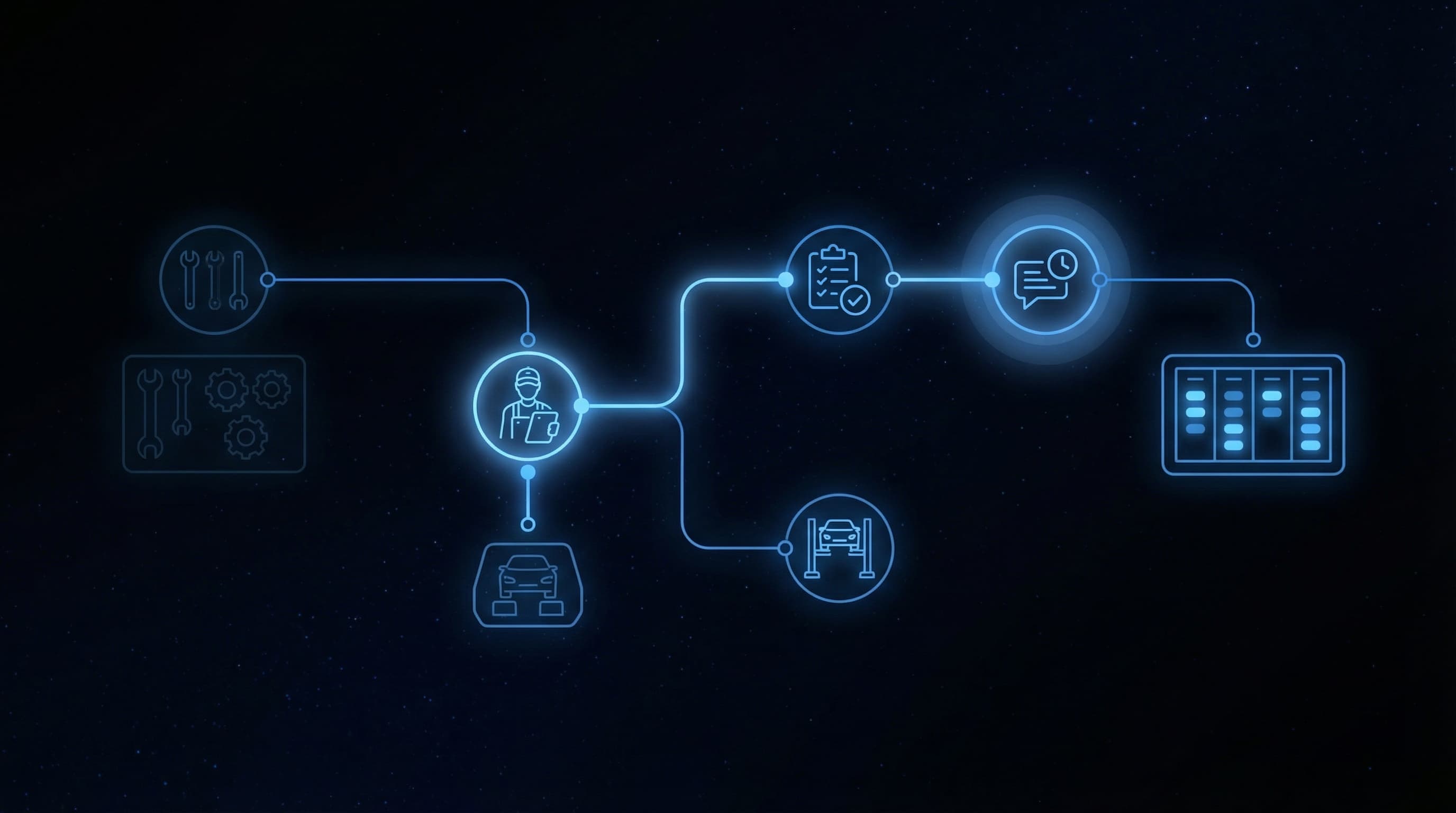
Declined Services Captured from Your Shop Management System
Elevasis connects to your existing platform—Mitchell 1, Tekmetric, ShopWare, R.O. Writer, or similar—and automatically identifies every declined service line item with customer contact information, vehicle details, and original estimate amounts. No manual data entry required.
- 2
Smart Prioritization by Urgency and Value
The system categorizes declined services by safety criticality (brakes, tires, fluids) and revenue value, ensuring your highest-priority follow-ups happen first. Safety-related items receive different messaging that emphasizes vehicle condition rather than just price.
- 3
Personalized SMS Sequence Triggers Automatically
Within the optimal follow-up window, customers receive personalized messages referencing their specific vehicle and the original inspection findings. SMS achieves 85-90% open rates within the first hour—far exceeding email or phone outreach effectiveness.
- 4
Response Routing to Service Advisors
When a customer replies or clicks to schedule, Elevasis routes them directly to your booking system or alerts your service advisor with full context—the original RO, declined items, and message history. Your team engages warm leads, not cold calls.
- 5
Revenue Recovery Dashboard Tracks Results
Shop owners see exactly how much declined service revenue has been recovered, which message sequences perform best, and which service categories convert highest. This data helps optimize both follow-up timing and original estimate presentation.
Results
Shops using automated declined service follow-up recover 15-25% of previously lost revenue, with SMS reactivation messages achieving 85-90% open rates. Annual revenue per customer increases 10-15% as deferred work returns to your bays instead of competitors. The 90-day follow-up window captures work before customers forget or find another shop—turning your existing DVI findings into completed repair orders.
Impact of Declined Service Follow-Up Automation
0%
Declined Revenue Recovered
Declined services booked within 90 days
0%
SMS Open Rate
Within the first hour of send
0%
Annual Revenue Per Customer
Increase with systematic follow-up
0 days
Optimal Follow-Up Window
Highest conversion within first 5 days
Source: Vendor Data
Frequently Asked Questions
Elevasis tracks customer responses and automatically removes them from follow-up sequences when they indicate the work is done. The system also monitors your own RO data—if a customer returns and completes the service, follow-up stops immediately. This prevents embarrassing duplicate outreach and keeps your messaging relevant.
Absolutely. Elevasis provides a dashboard showing all pending follow-ups, allowing advisors to claim specific customers for personal outreach while automation handles the rest. Many shops use AI for routine follow-ups while advisors personally contact customers with $1,000+ in declined services.
Elevasis groups declined items intelligently, sending a single consolidated message rather than separate texts for each line item. The system prioritizes safety-critical items in messaging while including the full list of recommendations. Customers see one clear follow-up, not a barrage of texts.
Most shops are live within 5-7 business days. Setup involves connecting to your shop management system, configuring message templates with your shop's voice, and setting follow-up timing preferences. Elevasis integrates with Mitchell 1, ShopWare, Tekmetric, NAPA TRACS, R.O. Writer, and AutoFluent.
The system can be configured to delay follow-up for specific service categories based on parts availability or shop capacity. You can also pause campaigns during peak seasons and resume when bays open up. This ensures you're not creating customer demand you can't fulfill.
Elevasis spaces messages appropriately and limits total outreach attempts. Messages are framed around vehicle safety and condition rather than aggressive sales language. Customers can opt out with a single reply, and the system respects their preferences permanently. Open rates of 85-90% indicate customers find the reminders helpful, not intrusive.
Ready to Automate Your Business?
See exactly how much declined service revenue your shop could recover. Schedule a demo to connect Elevasis to your shop management system and start bringing back the work that's walking out your door.