Technician Notifications for Home Services
Last updated: March 2026
Overview
If you've ever watched your dispatcher juggle 50 technician-related calls per day while customers flood the line asking "when will someone arrive?", you understand the communication chaos that plagues home service operations. The dispatcher becomes a human switchboard—relaying job details verbally, fielding ETA questions, and tracking down technicians who should already have the information they need. It's exhausting, expensive, and entirely preventable.
The numbers tell a frustrating story: dispatchers spend 35-50% of their time on technician coordination calls, while 66% of customers cite lack of ETA updates as their top frustration with home service companies. Meanwhile, 23% of jobs are delayed because critical information got lost somewhere between the office and the field. Every verbal briefing that takes 20-30 minutes is time your dispatcher isn't booking new jobs or following up on quotes.
This page breaks down exactly how automated technician notification systems work, what results home service companies achieve, and how Elevasis orchestrates these automations with your existing field service management tools like ServiceTitan, Jobber, HouseCall Pro, FieldEdge, WorkWave, or ServiceFusion. You'll see the step-by-step workflow, the specific metrics you can expect, and answers to common questions about implementation.
The Problem
The average dispatcher handles 40-60 technician-related calls daily, with 35-50% of their total time consumed by coordination that shouldn't require a phone call. Each verbal job briefing takes 20-30 minutes, and technicians lacking complete job details require 15-25% more time per job to complete the work. Add the constant stream of customer ETA calls—the number-one frustration for 66% of home service customers—and your dispatcher is buried. The result: 23% of jobs delayed due to incomplete information handoff, and a dispatcher who costs $52,000-$68,000 annually but spends half their day as a human relay station.
The Solution
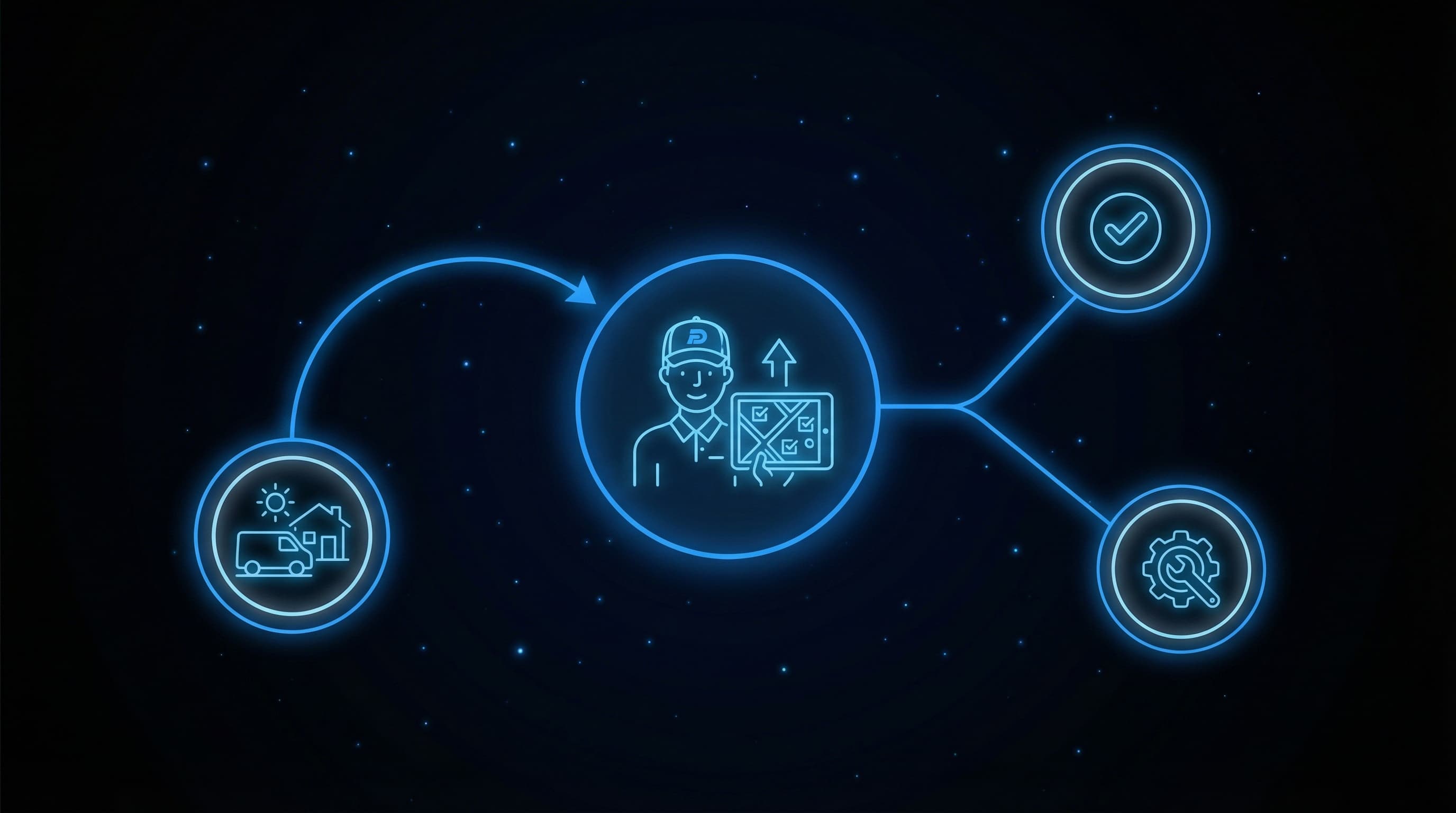
Elevasis orchestrates automated technician notifications that deliver complete digital job packages the moment a job is assigned—customer history, service address, job type, required equipment, and special instructions arrive on the technician's device without a single phone call. Real-time ETA notifications push automatically to customers as technicians complete prior jobs and route to the next stop, eliminating "where is my technician?" calls before they happen. The system integrates with your existing field service platform (ServiceTitan, Jobber, HouseCall Pro, or similar) to pull job data automatically, optimize route sequences across your service territory, and trigger status updates based on actual technician movement.
How It Works
- 1
Job assignment triggers digital package delivery
When a job is scheduled in your field service management system, Elevasis automatically compiles a complete digital job package—customer contact info, service history, job type, equipment needed, access codes, and special notes. This package is delivered instantly to the assigned technician's mobile device, eliminating the 20-30 minute verbal briefing.
- 2
Route optimization sequences the day's jobs
The system analyzes your technician's assigned jobs and optimizes the route based on location, service window commitments, and job type duration estimates. Technicians see their full day mapped out with realistic drive times between stops, reducing backtracking and wasted windshield time.
- 3
Customer receives automated appointment confirmation
Before the service day, customers receive SMS or email confirmation with their service window. On the day of service, they get an automated notification when the technician is en route, including a real-time ETA based on actual location. This proactive communication prevents the customer from calling to ask.
- 4
Status updates flow automatically as jobs progress
When a technician marks a job complete or en route to the next stop, the system automatically updates the customer queue with revised ETAs. Dispatchers see a real-time dashboard without making a single "where are you?" call to technicians in the field.
- 5
Exception alerts notify dispatcher only when needed
If a job runs significantly over estimate, a technician encounters an unexpected issue, or a customer requests a callback, the system alerts the dispatcher with context already attached. Human intervention happens only for genuine exceptions—not routine status checks.
Results
Home service companies implementing automated technician notifications see dispatcher coordination calls drop by 40-50%, freeing 1.5-2.5 hours daily for higher-value work like scheduling and quote follow-up. Customer ETA inquiries decline by 60-70% as proactive notifications answer the question before it's asked. Technicians receiving complete digital job packages complete jobs 15-20% faster, translating directly to increased daily job capacity without adding headcount.
Technician Notification Automation Results
0%
Coordination Calls Eliminated
Fewer dispatcher-to-tech calls daily
0%
ETA Inquiry Calls Reduced
Customers get automated status updates
0hrs/day
Dispatcher Time Saved
Freed from technician coordination
0%
Job Completion Speed
Faster with digital job packages
Source: Vendor Data
Frequently Asked Questions
The system automatically recalculates ETAs for all downstream jobs and sends updated notifications to affected customers. Your dispatcher receives an alert only if the delay exceeds a threshold you set (e.g., 30+ minutes), so they can proactively reach out to customers with significant schedule impacts rather than fielding reactive complaints.
Absolutely—automated notifications supplement your team, not replace human contact. The difference is that most customers don't need to call because they already have the information. Your dispatcher handles exception calls and complex situations instead of answering the same "when will someone arrive?" question 30 times a day.
Elevasis pulls job type information from your field service platform and factors in equipment requirements, skill certifications, and drive times when optimizing routes. If a technician handles both HVAC maintenance and plumbing emergencies, the system prioritizes based on service window commitments and urgency levels you define.
Most home service companies are fully operational within 2-3 weeks. The first week focuses on integrating with your existing field service platform (ServiceTitan, Jobber, HouseCall Pro, etc.) and configuring notification templates. Week two involves testing with a small group of technicians before full rollout.
Technicians adopt quickly because the digital package gives them more information than a verbal briefing—customer history, photos from prior visits, access codes, and equipment lists are all in one place. We typically see dispatcher coordination calls drop within the first week as technicians realize they have everything they need on their device.
The system flags jobs with incomplete customer data before the service day, giving your team time to update records. For recurring maintenance customers, Elevasis can prompt for contact verification during the confirmation sequence, keeping your database current without manual data entry.
Ready to Automate Your Business?
See how Elevasis orchestrates technician notifications with your existing field service platform. Schedule a demo to walk through the exact workflow for your service territory and job types.