Maintenance Agreement Automation for HVAC Contractors
Last updated: March 2026
Overview
Maintenance agreements are the only predictable revenue line in a business driven by seasonal swings. While your service call volume fluctuates 3-5x between peak and off-peak seasons, a healthy agreement base delivers consistent monthly income regardless of weather. Companies with strong agreement programs report 30-40% higher profit margins than those without, according to the ServiceTitan HVAC Benchmark Report.
Yet most HVAC contractors are hemorrhaging this predictable revenue through preventable lapse. The industry average renewal rate sits at just 55-65% for companies relying on manual outreach—phone calls, paper notices, or hoping the technician mentions it during the annual tune-up. Only 38% of contractors even have a documented process for renewals, according to ACCA's 2022 contractor survey. The rest are leaving tens of thousands of dollars on the table every year.
This guide explains how automated maintenance agreement systems work, why timing and multi-channel outreach dramatically improve retention, and what concrete results HVAC contractors achieve when they stop relying on memory and paper to protect their recurring revenue base.
The Problem
The typical HVAC contractor loses 35-45% of maintenance agreement customers annually through preventable lapse. Manual renewal outreach fails for a predictable reason: 72% of contractors send renewal notices less than 30 days before agreement expiration, according to ServiceTitan data—giving customers almost no time to decide before the agreement quietly expires. Worse, 40-50% of customers who let agreements lapse will switch to a competing HVAC company within 12 months, per ACCA estimates. That means every lost renewal is not just foregone revenue—it is a customer handed to your competitor. On a 500-unit agreement base at $200 average annual value, the difference between a 60% and 80% renewal rate is $40,000 per year in retained recurring revenue.
The Solution
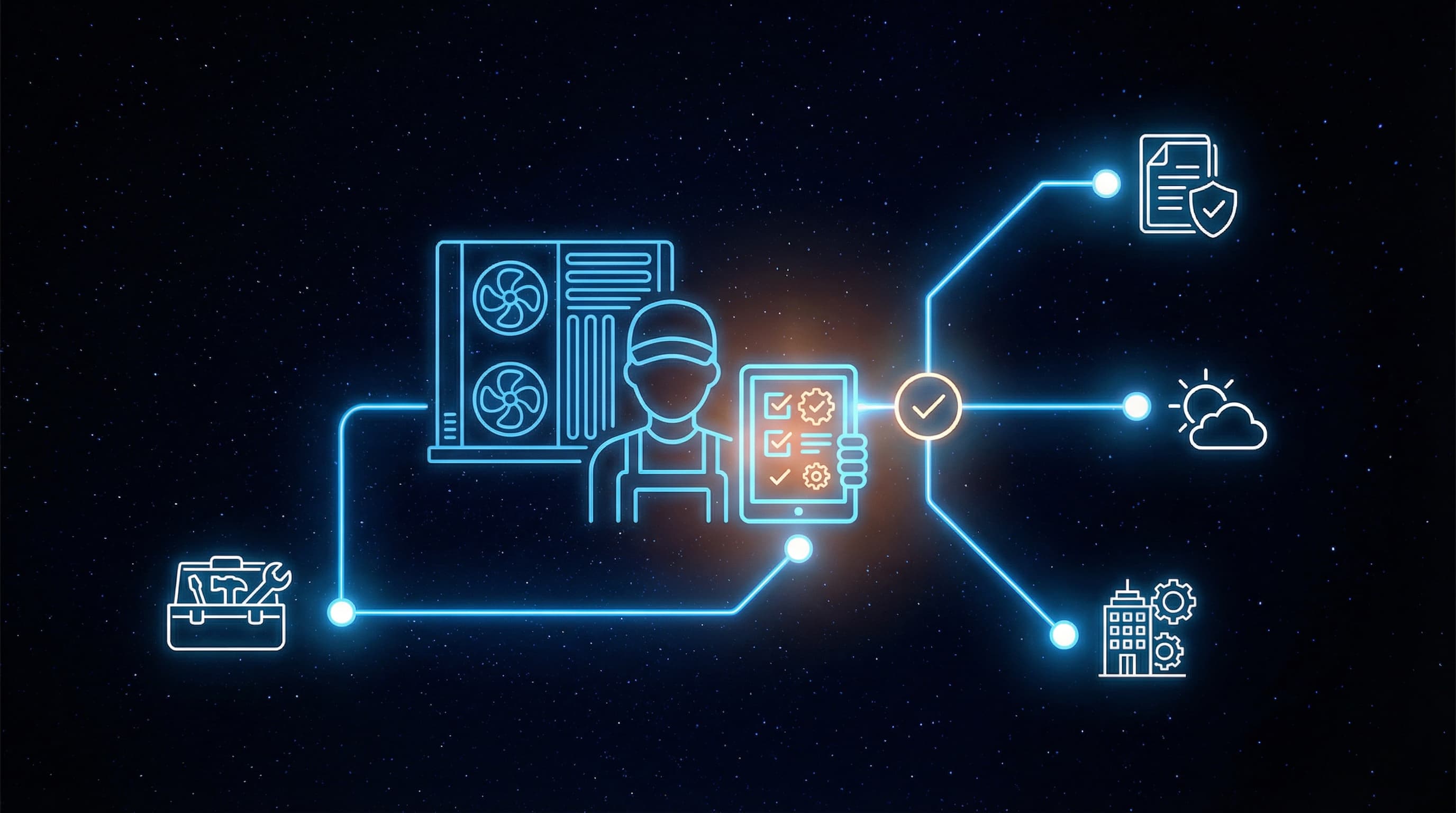
Elevasis automates the entire maintenance agreement renewal lifecycle—from early-warning outreach to scheduled tune-up booking—without requiring dispatcher time or technician memory. The system triggers multi-touch email and SMS sequences starting 90 days before each agreement expires, ensuring customers receive timely, personalized renewal prompts across their preferred channels. When a customer confirms renewal, Elevasis automatically schedules their tune-up appointment for same-week booking instead of the industry-average 3-4 week scheduling lag. For customers who do not respond, the system escalates through additional touchpoints and flags at-risk accounts for personal outreach before they lapse to a competitor.
How It Works
- 1
System Syncs Agreement Data from Your FSM
Elevasis connects to your field service management platform—ServiceTitan, FieldEdge, Service Fusion, Successware, dESCO ESC, or Coolfront—and imports all active maintenance agreements with expiration dates, customer contact information, and service history. This creates a live renewal calendar that updates automatically as new agreements are sold.
- 2
90-Day Renewal Sequences Trigger Automatically
When an agreement enters the 90-day-to-expiration window, the system launches a personalized multi-channel campaign. Unlike the industry standard of waiting until 30 days out, this early start gives customers time to budget and decide while your company is still top of mind from their last tune-up.
- 3
Multi-Touch SMS and Email Outreach Continues
The sequence sends coordinated messages at 90, 60, 30, 14, and 7 days before expiration—mixing email and SMS based on customer response patterns. Each message includes a one-click renewal link and highlights agreement benefits like priority scheduling and discount pricing during peak season service calls.
- 4
Renewals Auto-Book Tune-Up Appointments
When a customer clicks to renew, Elevasis processes the renewal and immediately offers available tune-up appointment slots. This reduces the typical 3-4 week scheduling lag to same-week booking, improving customer experience and ensuring the technician visit happens while the renewal is fresh.
- 5
At-Risk Accounts Surface for Personal Follow-Up
Customers who have not responded after multiple automated touches get flagged in a daily digest for your office staff. This allows your team to focus personal phone calls only on the accounts that need human intervention—typically 15-20% of your renewal base—rather than manually chasing every expiring agreement.
Results
HVAC contractors using automated maintenance agreement renewal workflows report renewal rate improvements of 20-30 percentage points versus manual outreach, according to ServiceTitan benchmarks. Agreement base growth accelerates to 15-25% year-over-year compared to 3-5% for manual-process companies. Customers enrolled in automated renewal sequences show 35% higher lifetime value than non-agreement customers, driven by increased equipment replacement capture when systems eventually fail.
Maintenance Agreement Automation Impact
0%
Renewal Rate with Automation
80–85% vs. 58% industry average
0$/yr
Revenue Retained (500 agreements)
20-pt improvement at $200/unit (derived)
0%
Agreement Base Growth (Automated)
Year-over-year vs. 4% for manual shops
0%
Customer LTV Increase
Agreement holders vs. non-agreement customers
Source: Vendor Data
Frequently Asked Questions
Elevasis routes upgrade requests to your team with full customer history attached, including current agreement details and equipment on file. The system can present upgrade options in the renewal flow—such as adding a second system or moving to a premium plan—and flags complex requests for a comfort advisor follow-up call rather than processing automatically.
Absolutely—automated sequences supplement your existing renewal process rather than replacing it. When a customer calls to renew, your CSR processes it normally in your FSM system, and Elevasis automatically stops the renewal sequence for that customer. The system adapts to however the customer prefers to interact.
Elevasis tracks agreements at the customer level with equipment associations, so commercial accounts with multiple units receive a single coordinated renewal communication covering all their systems. The tune-up scheduling component can book multiple technician visits for multi-system properties in sequence to minimize customer disruption.
Most HVAC contractors are fully operational within 2-3 weeks. The integration with your FSM platform typically completes in 3-5 business days, followed by a week of sequence customization and testing. You will review message templates, set renewal pricing, and approve the outreach timing before any customer communications go live.
During setup, Elevasis runs a data quality audit that identifies agreements with missing expiration dates, incorrect contact information, or duplicate records. The system provides a cleanup report so you can correct critical issues before launch—and flags ongoing data quality problems as they occur rather than letting them silently break renewal outreach.
Elevasis provides detailed engagement tracking showing open rates, click-through rates, and renewal conversions by message and channel. You can see which touchpoints drive the most renewals—typically the 30-day and 14-day SMS messages perform strongest—and adjust your sequence based on actual customer response patterns in your market.
Ready to Automate Your Business?
See how Elevasis protects your maintenance agreement revenue with automated renewal campaigns built for HVAC contractors. Schedule a demo to map your current agreement base and calculate your specific renewal rate improvement opportunity.