Cross-Sell & Upsell Sequences for Insurance Agencies
Last updated: March 2026
Overview
Selling to an existing client succeeds 60-70% of the time. Selling to a new prospect? Just 5-20%. Yet most independent P&C agencies handle cross-selling reactively — waiting for the client to call in with a question about umbrella coverage or a new vehicle. By then, they may have already shopped elsewhere.
The average independent agency carries just 1.2-1.5 policies per client. That single-policy exposure creates serious churn risk. Clients with one policy leave at 33% per year. Clients with three or more policies? Just 9%. Every policy you add is another anchor keeping that relationship in place.
This page shows how automated cross-sell and upsell sequences work for insurance agencies. You'll see the specific triggers, timing, and workflows that turn passive client relationships into growing accounts — without adding to your CSR workload.
The Problem
Right now, 75% of your renewals miss the upsell conversation entirely. Your producers and CSRs handle cross-selling when they remember, or when a client happens to mention a life change. Meanwhile, clients buy homes, have babies, start businesses, and add vehicles — all without your agency knowing until months later. Single-policy clients churn at 33% annually because they have exactly one reason to stay. One competing quote can undo the entire relationship.
The Solution
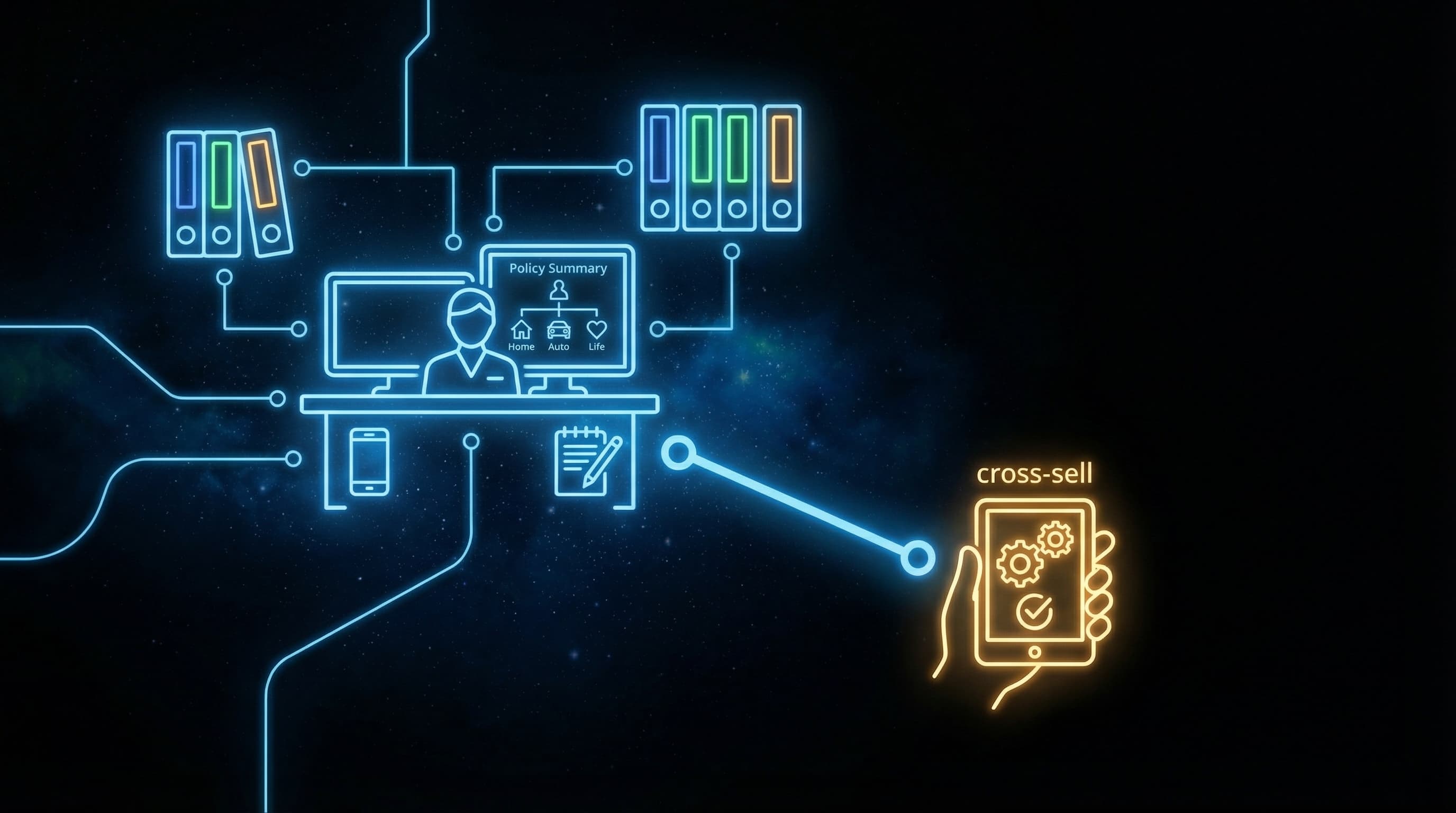
Elevasis monitors life event triggers and policy gaps across your book of business. When a client closes on a new home, adds a vehicle to their household, or files a business license, the system automatically initiates a personalized cross-sell sequence. These multi-touch campaigns combine email, SMS, and task assignments to your producers — timed to reach clients when the coverage need is fresh. Your AMS data syncs in real time, so outreach reflects current policies and avoids awkward duplicate pitches.
How It Works
- 1
Sync client data from your AMS
Elevasis connects to Applied Epic, AMS360, HawkSoft, or EZLynx to pull policy details, household composition, and coverage gaps. This creates a live picture of cross-sell opportunities.
- 2
Monitor for life event triggers
The system watches for signals like new home purchases, vehicle additions, business filings, and family changes. Each trigger maps to specific coverage recommendations.
- 3
Launch personalized outreach sequences
When a trigger fires, automated emails and texts go out with relevant offers. Messaging references the client's current policies and the specific gap being addressed.
- 4
Route warm leads to the right producer
Clients who respond get routed to their assigned producer with full context. The producer sees the trigger, current book, and recommended products in one view.
- 5
Track results and optimize timing
Every sequence reports on open rates, responses, and policies written. You see which triggers and timing windows convert best for your specific client base.
Results
Agencies using automated cross-sell sequences add 20-30% more policies per client within the first year. Clients with three or more policies become 80% less likely to leave, dropping churn from 33% to under 10%. On a 1,000-client book, an average of $150 in additional premium per client translates to $150,000 in new annual revenue — from relationships you already own.
Frequently Asked Questions
Elevasis checks current policy data before launching any sequence. If a client already has the coverage type, they're excluded from that campaign automatically. Your AMS sync runs continuously, so the system always reflects the latest policy changes.
Absolutely. Automated sequences handle the systematic outreach your team doesn't have time for. Producers can still reach out personally, and the system logs their activity to prevent duplicate contacts. Think of it as a safety net that catches the opportunities humans miss.
Commercial accounts receive tailored sequences based on business type and existing coverage. A contractor with GL and commercial auto might get outreach about inland marine or umbrella coverage. The system recognizes multi-policy commercial relationships and adjusts recommendations accordingly.
Most agencies launch their first sequences within two weeks. The AMS integration takes 2-3 days, followed by configuring triggers and message templates. Your existing client data starts flowing into campaigns immediately after setup.
The system monitors for new home purchases, vehicle additions, business license filings, marriage and divorce records, and household member changes. Data sources vary by state, but most triggers cover the major coverage-need moments. You can also create custom triggers based on policy anniversaries or coverage thresholds.
Messages come from the assigned producer's name and email, not a generic agency address. Templates use conversational language and reference specific details like the client's current home policy or recent vehicle addition. Clients experience it as their agent being proactively helpful, not robotic.
Ready to Automate Your Business?
Show me how automated cross-sell works for my agency — book a 15-minute demo.