24/7 Emergency Call Capture for Plumbing Companies
Last updated: March 2026
Overview
A pipe bursts at midnight. The homeowner grabs their phone and calls the first plumber they find. Your phone rings four times and goes to voicemail. They hang up and dial the next number. That $1,000 emergency job just became your competitor's revenue. This happens 28% of the time for the average plumbing business—and 62% of emergencies occur after hours when no one is there to answer.
Voicemail isn't a backup plan. It's a referral service for your competition. 85% of callers who reach voicemail hang up and call another plumber. They're standing in two inches of water. They don't want to leave a message and wait. They want someone to pick up right now.
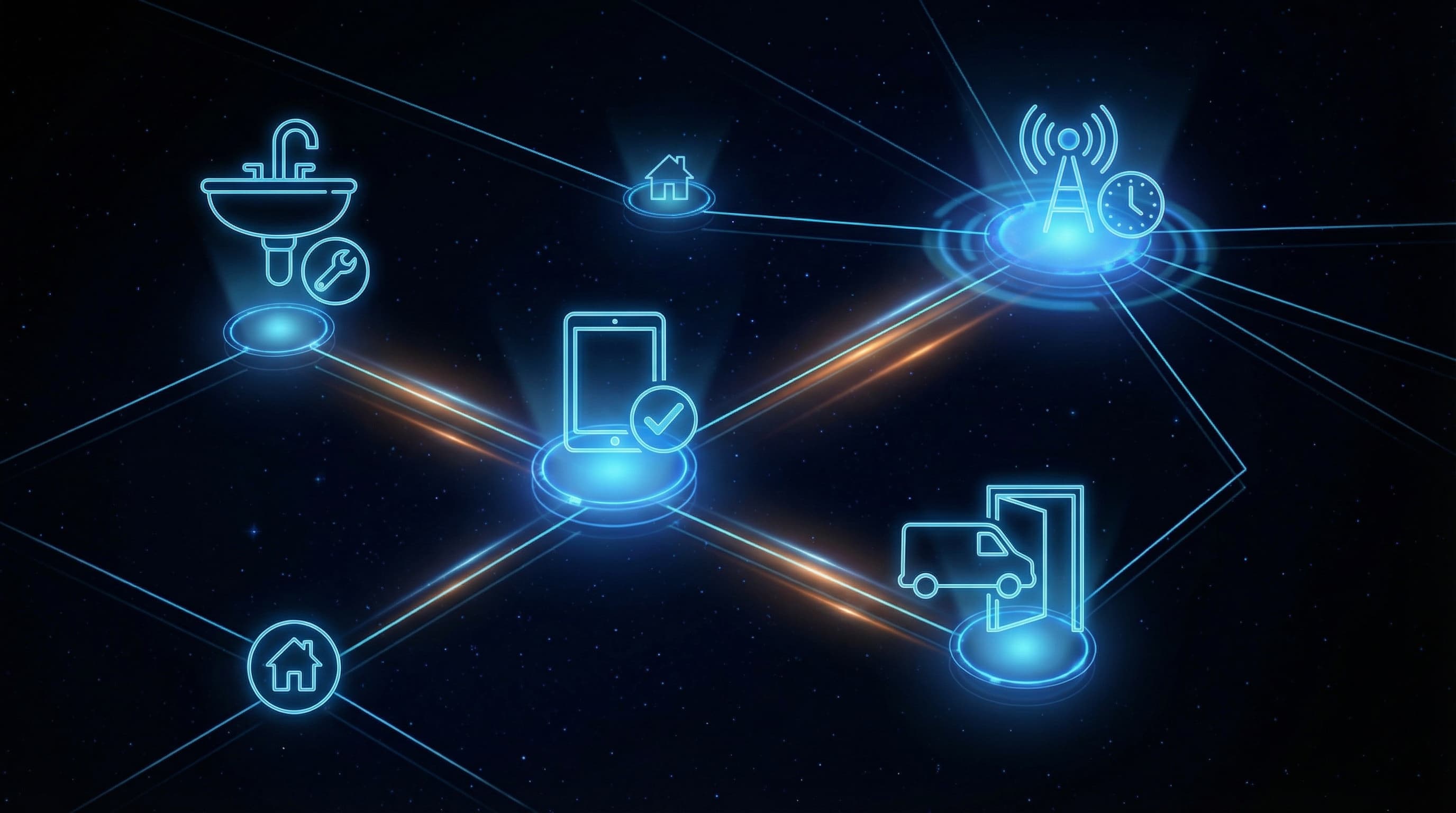
This page shows you how AI-powered call capture works for plumbing companies. You'll see exactly how the system answers emergency calls, qualifies the job, books it into your schedule, and dispatches your on-call technician—all without waking you up unless the situation requires it.
The Problem
Your office closes at 5 PM, but 62% of plumbing emergencies happen outside business hours. Every missed call costs you $500-$2,000 in emergency work that carries 60-70% gross margins. The math is brutal: 28% of your inbound calls go unanswered, and 85% of those callers immediately call a competitor. 78% of customers hire the first company that responds. Your voicemail greeting is costing you $50,000-$120,000 per year.
The Solution
Elevasis answers every call within seconds—midnight, weekends, holidays—with an AI assistant trained on plumbing emergencies. The system asks the right questions: What's happening? Where's the water? Is there a shutoff valve? It captures caller information, assesses urgency, and books the job directly into your scheduling software. For true emergencies like burst pipes or active flooding, it immediately texts your on-call technician with job details and customer location.
How It Works
- 1
AI Answers Within Seconds, Day or Night
When a call comes in after hours, the AI picks up immediately. No hold music, no voicemail tree. The caller hears a professional greeting and knows they've reached a real business.
- 2
AI Qualifies the Emergency and Gathers Details
The system asks about the problem—burst pipe, sewer backup, water heater failure. It collects the address, determines if water is actively spreading, and identifies the shutoff valve status.
- 3
Job Gets Booked Into Your Scheduling System
Call details sync directly with your practice management software. The job appears on tomorrow's schedule or the emergency queue, complete with problem notes and customer contact info.
- 4
On-Call Technician Receives Instant Alert
For urgent situations, your designated technician gets a text with the job address, problem description, and customer phone number. They can accept the call with one tap.
- 5
Customer Gets Confirmation and ETA
The caller receives a text confirming the booking. For emergencies being dispatched immediately, they see the technician's name and estimated arrival time.
Results
Plumbing companies using AI call capture reduce missed calls by 60% and recover $50,000-$120,000 per year in previously lost revenue. The 78% of customers who hire the first responder now become your customers instead of your competitor's. Emergency jobs—the highest-margin work you do at 60-70% gross profit—stop slipping away to whoever happens to answer the phone.
Frequently Asked Questions
The system answers every call 24/7, including nights, weekends, and holidays. It captures the caller's name, address, problem description, and urgency level through a natural conversation. Emergency jobs like burst pipes or sewer backups are immediately routed to the on-call technician via text and app notification. Non-emergency requests get scheduled for the next business day.
The system is trained on common plumbing emergency descriptions and follows up with clarifying questions when needed. If a caller's situation is truly ambiguous, the system escalates directly to your on-call tech with all captured details and a recording. Less than 3% of calls typically require manual follow-up, and the system improves with each interaction.
Yes, the system connects with most field service management platforms. When a call is captured, the job details flow directly into your scheduling software with the right job type, priority level, and customer information pre-filled. Your dispatchers see new emergency jobs appear in real time without any manual data entry or double-handling.
Most plumbing companies miss 30-40% of after-hours calls, which translates to $50,000-$120,000 in lost annual revenue. Emergency plumbing jobs carry premium rates, so each missed call represents $300-$800 in potential revenue. The system captures 100% of calls, converting previously lost opportunities into booked jobs.
The system uses natural, conversational language that feels like speaking with a professional dispatcher. It asks the same qualifying questions your best dispatcher would — location, problem type, severity, access instructions. Most callers focus on getting help fast and don't notice the difference. You can customize the greeting and tone to match your company's brand.
Most plumbing companies go live within one week. Setup includes configuring your call routing, customizing the intake questions for your service area, and connecting to your scheduling software. You'll test with simulated calls before going live. The on-call rotation schedule can be updated anytime through a simple dashboard.
Ready to Automate Your Business?
Show me how AI captures my after-hours emergency calls. Book a 15-minute demo.