Candidate Pipeline Automation for Staffing Agencies
Last updated: March 2026
Overview
Your recruiters spend 70% of their time on administrative tasks. That leaves just 30% for what actually fills requisitions: talking to candidates and clients. When temp worker turnover runs at 419%, your pipeline needs constant replenishment. Manual screening can't keep pace.
The math is brutal. Reviewing one resume thoroughly takes up to 30 minutes. Screening candidates for a single position takes 3-4 hours. Multiply that by every open job order, and your team burns entire days on tasks that don't require human judgment. Meanwhile, 72% of hiring managers admit they've missed great candidates due to human error in screening.
Candidate pipeline automation solves this by handling the high-volume, repetitive work. AI parses resumes, matches qualifications to job orders, and surfaces the best fits. Your recruiters focus on relationship-building and closing placements instead of shuffling paperwork.
The Problem
Manual resume evaluation consumes up to 30 minutes per resume. Screening candidates for a single position takes 3-4 hours. Your recruiters spend 40% of their time just reviewing resumes. At 419% annual turnover, you're constantly refilling the same pipeline. Time-to-fill for professional temp roles averages 14 days with only a 40% fill rate. Every hour your team spends on admin work is an hour they're not building client relationships or closing placements.
The Solution
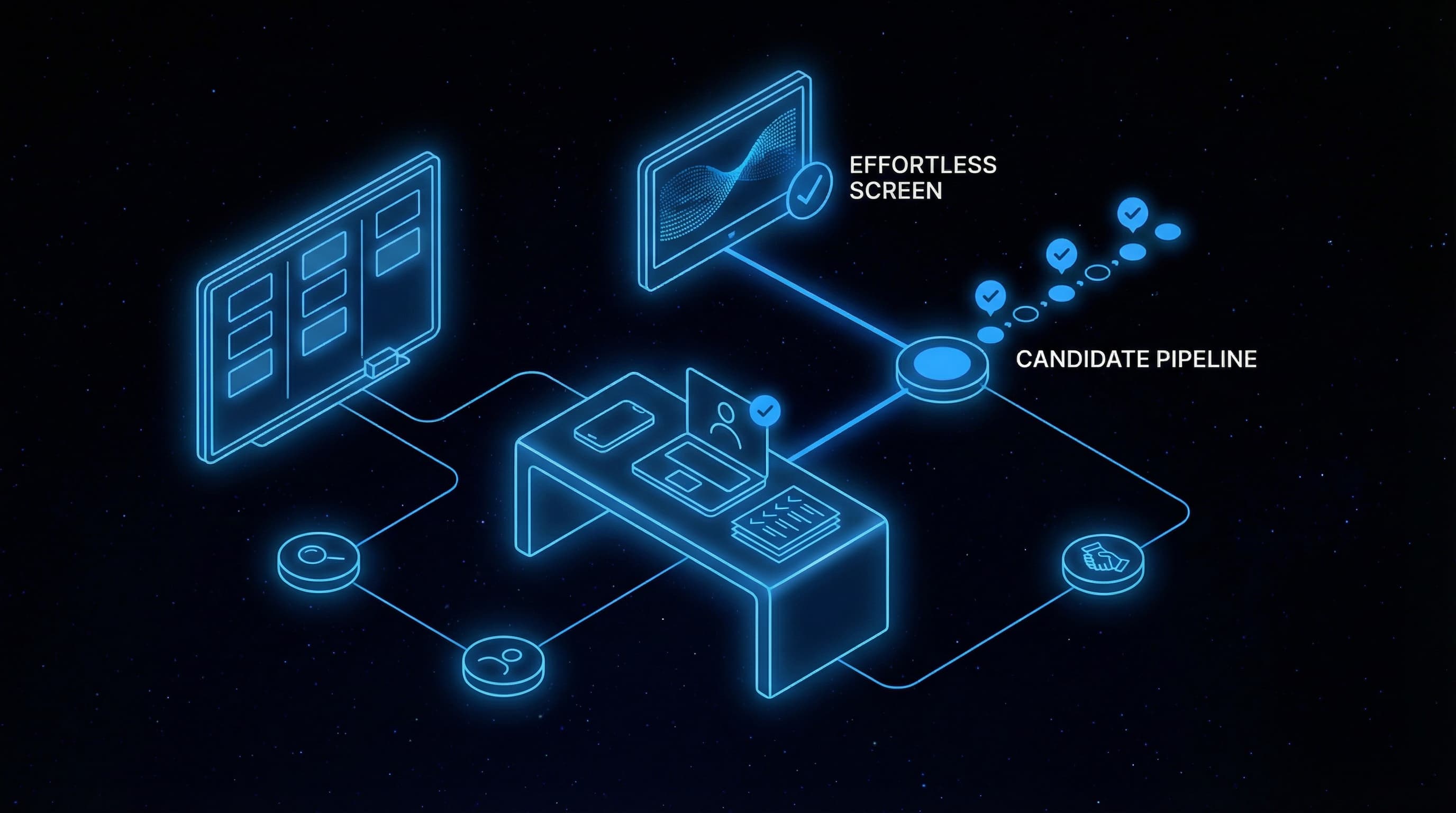
Elevasis automates the screening bottleneck. The platform parses incoming resumes, extracts qualifications, and matches candidates against job order requirements like certifications, experience, and availability. Qualified candidates flow directly into your ATS with match scores. Automated outreach sequences engage top candidates before competitors do. Your recruiters reclaim 15-20 hours per week and see screening time drop from 3-4 hours per position to 30-45 minutes.
How It Works
- 1
Resumes flow in from all sources
Candidates apply through job boards, your website, or email. Elevasis captures every resume and centralizes them for processing.
- 2
AI parses and extracts qualifications
The system pulls certifications, work history, skills, and availability from each resume. No manual data entry required.
- 3
Candidates match against open job orders
Each candidate is scored against your active requisitions. Bill rate expectations, required certifications, and shift availability all factor into the match.
- 4
Top matches sync to your ATS
Qualified candidates appear in your ATS with match scores and parsed details. Integration works with Bullhorn, Avionte, TempWorks, and other staffing platforms.
- 5
Automated outreach engages candidates
Text and email sequences contact top matches immediately. Candidates confirm interest and availability before your recruiter picks up the phone.
Results
Staffing agencies using candidate pipeline automation cut screening time by 75% and reduce time-to-interview by 66%. Recruiters save 15-20 hours per week on administrative tasks. Fewer qualified candidates slip through the cracks because AI catches matches that manual review misses. Time-to-fill drops by 30-50%, which means faster placements and more revenue per recruiter.
Frequently Asked Questions
The system automatically parses incoming resumes and matches candidates against your active job orders based on skills, experience, certifications, and location. Instead of reading through hundreds of resumes manually, your recruiters see a ranked shortlist of qualified candidates for each position. Screening time drops by about 75%, letting your team focus on relationship-building and placement.
The system matches candidates based on dozens of data points including skills, experience levels, certifications, location preferences, and salary expectations. It catches qualified candidates that human screeners sometimes overlook during high-volume periods. Match quality improves over time as the system learns from your placement history and recruiter feedback on candidate fit.
Yes, the system integrates with most applicant tracking systems used by staffing agencies. Candidate scores, match results, and status updates sync bidirectionally so your recruiters work in their familiar interface. New applications flow in automatically, and when a recruiter advances or rejects a candidate in the ATS, the pipeline updates accordingly.
Most staffing agencies see time-to-interview drop by about 66% after implementing pipeline automation. Jobs that previously took 3-5 days to source qualified candidates can have shortlists ready within hours. For high-volume light industrial or clerical placements, the speed improvement is even more dramatic since the system can process hundreds of applications simultaneously.
The system adapts to whatever verticals your agency serves — healthcare, industrial, administrative, IT, or any combination. Matching criteria adjust based on the role type, so a nursing placement weighs certifications and licensure differently than a warehouse position weighs physical requirements and shift availability. Each vertical can have its own screening rules.
Most agencies are operational within two weeks. The first week covers ATS integration, importing your active job orders, and configuring matching criteria for your primary verticals. The second week focuses on testing with live applications and training your recruiting team. You'll start seeing matched candidate shortlists from day one of going live.
Ready to Automate Your Business?
Show me how pipeline automation works for my agency. Book a 15-minute demo.